 |
|
|---|---|
    Geoguardian presents environmental contents based on satellite images and maps. This website deals with environmental and related research interests and is frequently updated with the latest environmental content. Kithsiri Perera - USQ, QLD, Australia, 2005-2015 |
Environmental Contents Archive 2009 (selected)
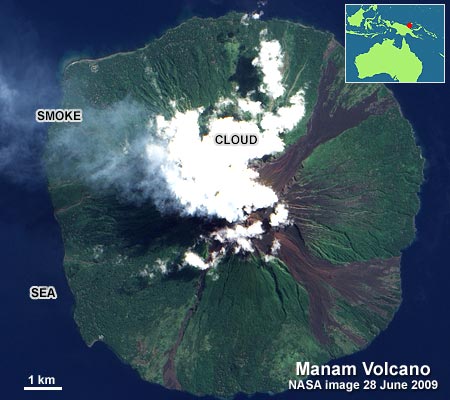
Manam Volcano
The spectacular view of Manam volcano, off the coast of Papua New Guinea, was captured by NASA’s Earth Observing – 1 satellite. The thin smoke over the northwest is smoke rising from the recent eruption. The thick white clouds formed by the water vapour released by the volcano have covered the peak of the mountain. According to the NASA website, Manami is one of the deadliest and most active volcanoes in Papua New Guinea, which frequently kills people. In the 1996 eruption, 13 villagers were killed, and the eruption in 2004 forced the entire population of the island to evacuate. With about 10km in diameter, Manam Island was created by the volcano itself, which rises up to 1807m.
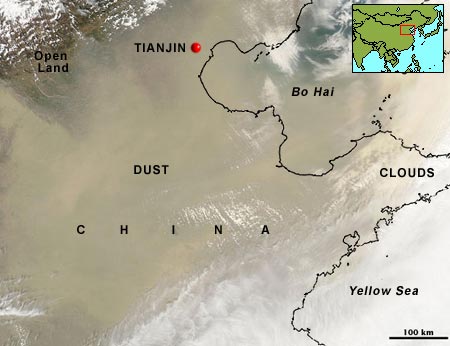
Dust blanketed China
Yellow dust is a historical environmental hazard for millions of people in China. This MODIS image issued by NASA shows one of the latest dust events, which covered a huge region of eastern China, including the Bohai Sea and Tianjin city. The source of the dust storm is the Taklimakan Desert, which is located northwest of the Bosai Sea area. According to the Chinese meteorological information, this dust storm became the severest recorded so far in 2009. Researchers suspect that these dust storms are also carrying industrial pollutants into populated areas in China and surrounding countries like Korea and Japan.
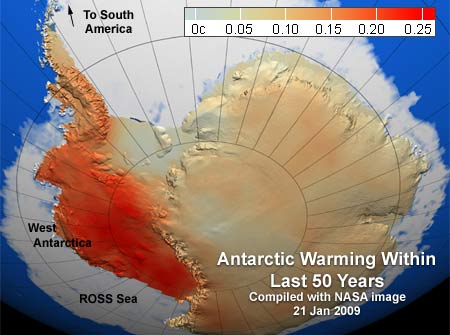
Warming Antarctic
NASA released this image, which shows a remarkable change in surface temperature in the West Antarctic. As a result of satellite observation over the last 50 years, the study concludes that not only in the Antarctic Peninsula (area closer to South America), but also in West Antarctica has recorded this warming condition. The reddest areas have recorded about a 0.25 °C increase over the last 50 years. According to NASA reports, this satellite data-based observation matches the limited ground-based observations available. Scientists are studying the possible impact on the global climate from this change, though the lack of enough ground stations and the very harsh climate in Antarctica are limiting such studies.
|

Geoguardian © 2005-2015. All rights reserved.